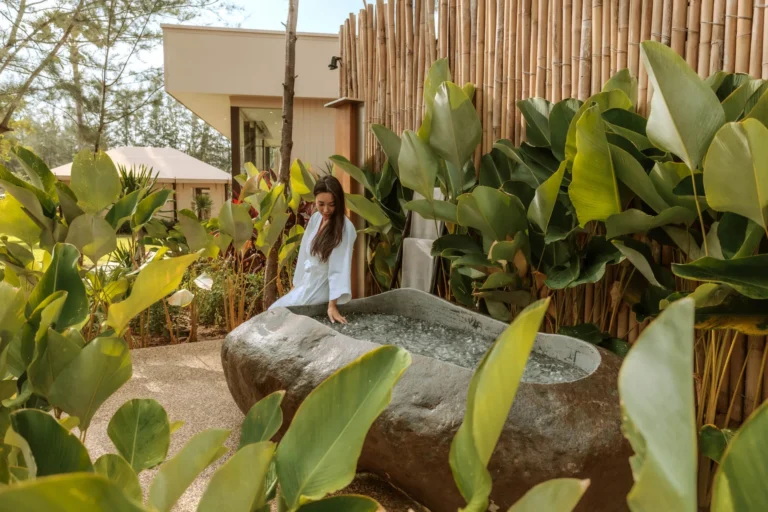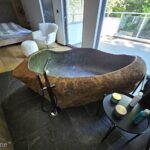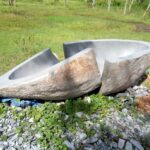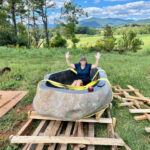

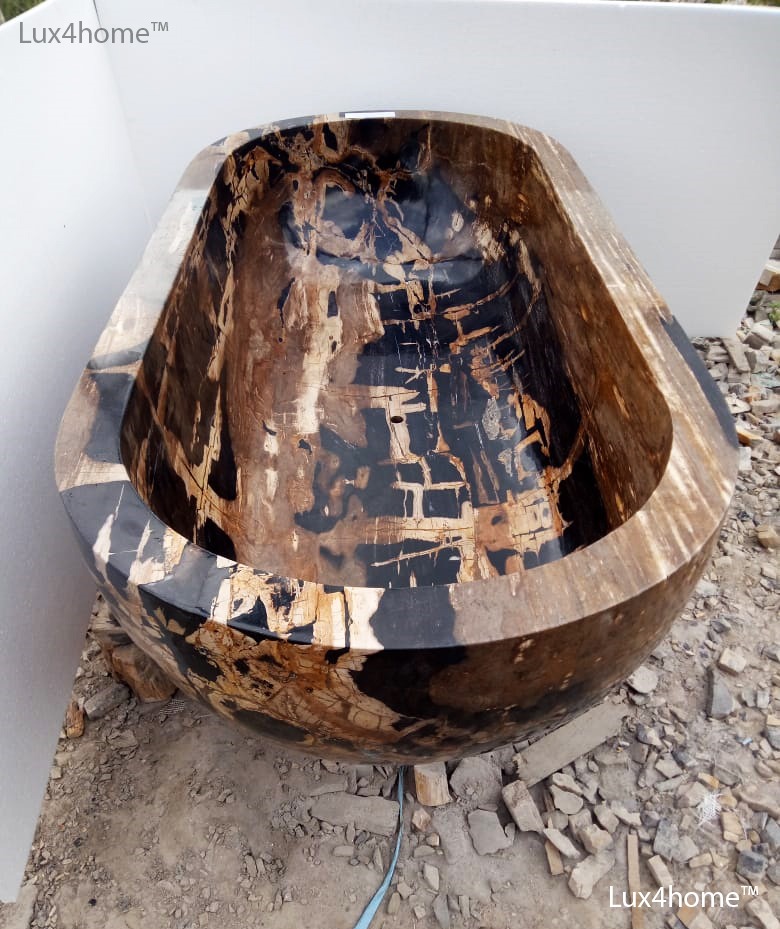
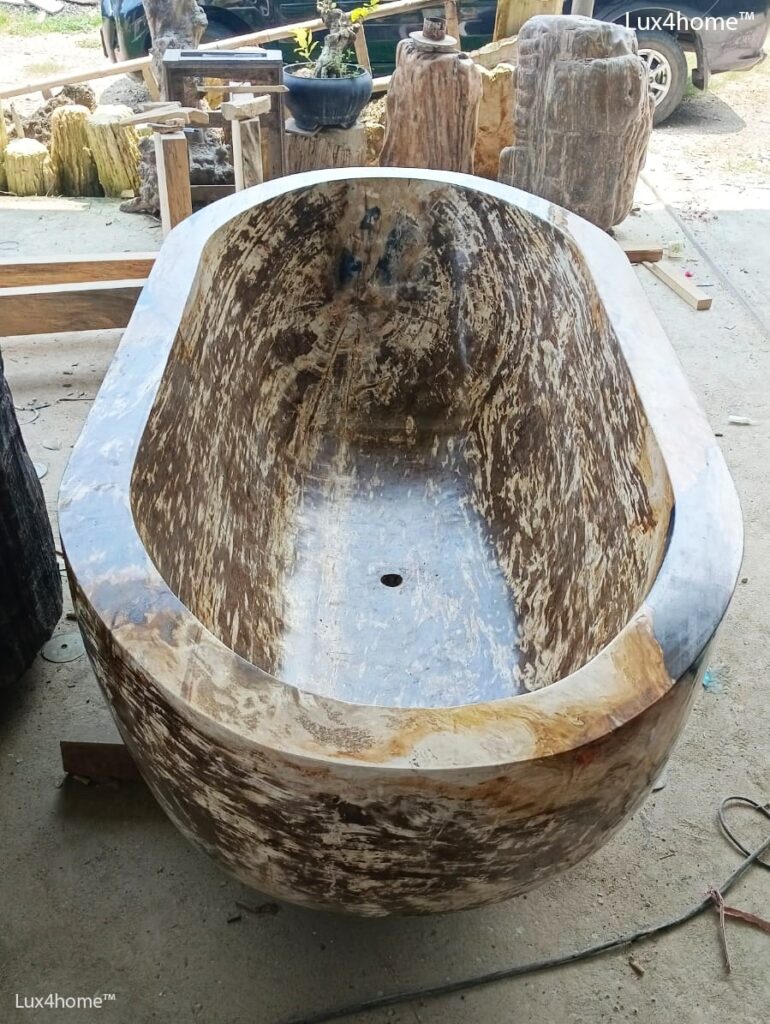
A fossilized trunk does not become a bath simply because it is large. Its usable dimensions, natural fractures and internal structure determine what our workshop can make from it. This article follows the material from its geological origins and selection in Indonesia to carving, polishing and resin stabilization. The original photographs show the material and the work discussed here.
Table of Contents
The fossil material our workshop works with
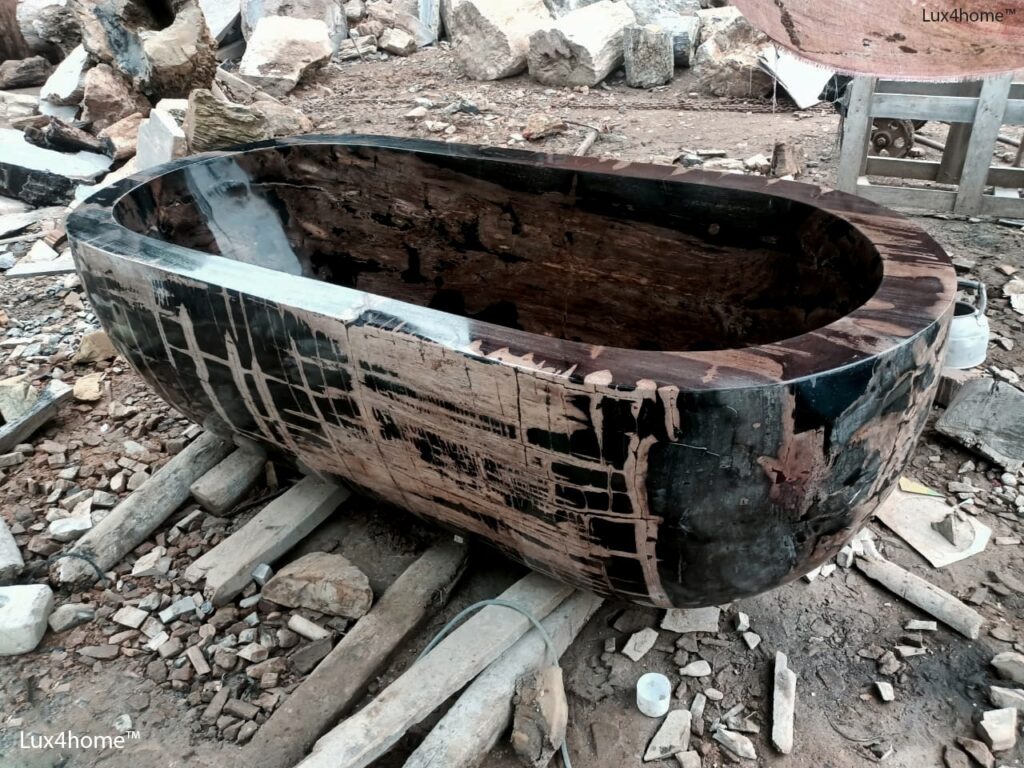
Petrified wood is fossil wood preserved through mineralization. Minerals can fill spaces in the original structure and replace organic tissue; these processes are called permineralization and replacement. Silica is common, although other minerals also occur. For the workshop, the important distinction is between the preserved appearance of wood and the stone material we actually cut. A fossil’s geological age does not tell us how long its mineralization took. For a broader explanation and identification guidance, read our guide to what petrified wood is.
How mineralization preserves the structure we see in the workshop
The process begins with burial. Sediment such as mud, sand or volcanic material covers fallen wood. Burial can limit oxygen and slow decomposition, allowing the structure to survive long enough for mineralization. The conditions around the wood matter as well as time: simply leaving a trunk underground does not guarantee that it will become a usable fossil.
Mineral-bearing groundwater moves through the buried material. Dissolved substances can precipitate in pores and cellular spaces. This mineral infilling is permineralization; it can preserve fine details that remain visible in a cut or polished surface.
Replacement is a related process in which minerals take the place of original organic material. It is not a chemical conversion of cellulose into silica. Mineral infilling and replacement can occur together, and the degree of preservation varies between specimens.
The result is a mineralized structure with very different working properties from timber. Preserved grain is visually important, but it does not make the fossil flexible like wood. When shaping it, the workshop must consider natural discontinuities and fractures.
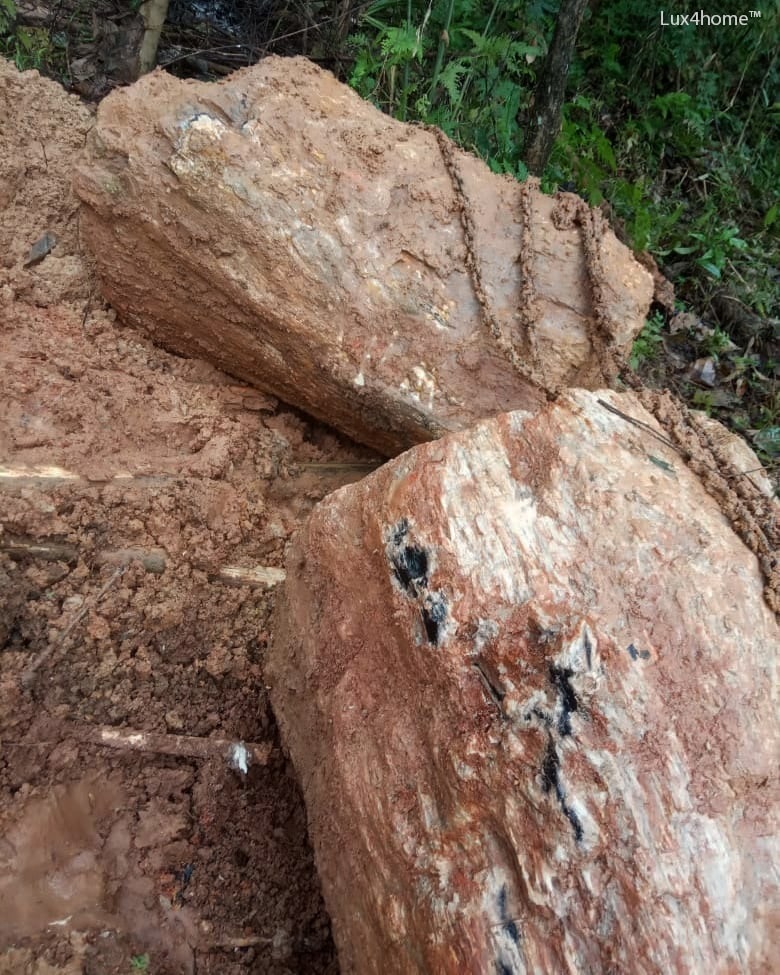
Petrification describes preservation through mineral infilling and/or replacement, rather than a fixed final stage shared by every specimen. The National Park Service explains these processes and their differences. This helps explain why two pieces with a similar wood-like appearance can have different internal structures.
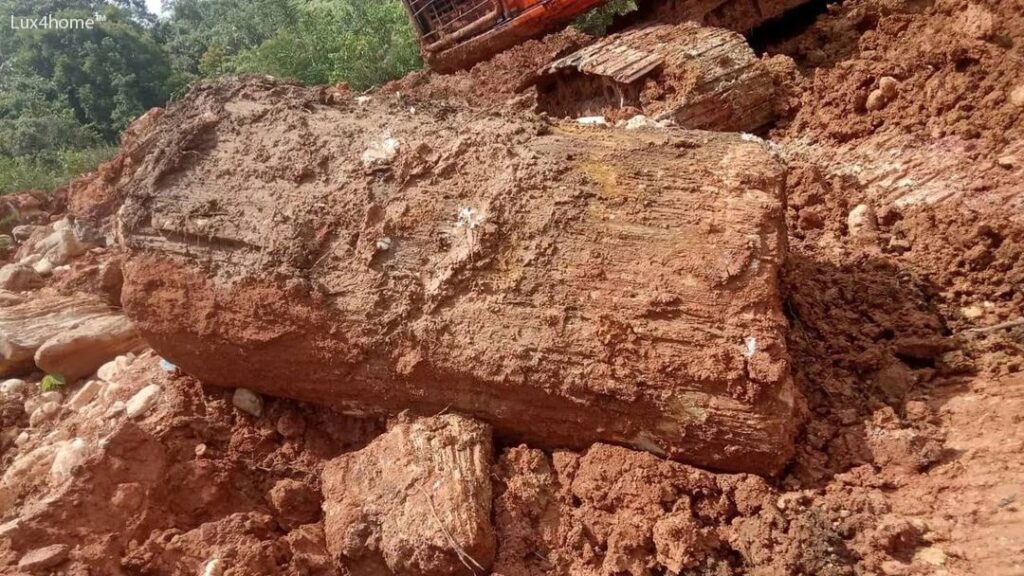
When a fossil trunk is exposed, its preserved structure connects the material with the original plant. Cutting and polishing reveal patterns that may be less apparent on its weathered exterior. For a maker, that discovery is only the beginning: the usable section still needs to be assessed before a form can be planned.
What makes each fossil trunk different
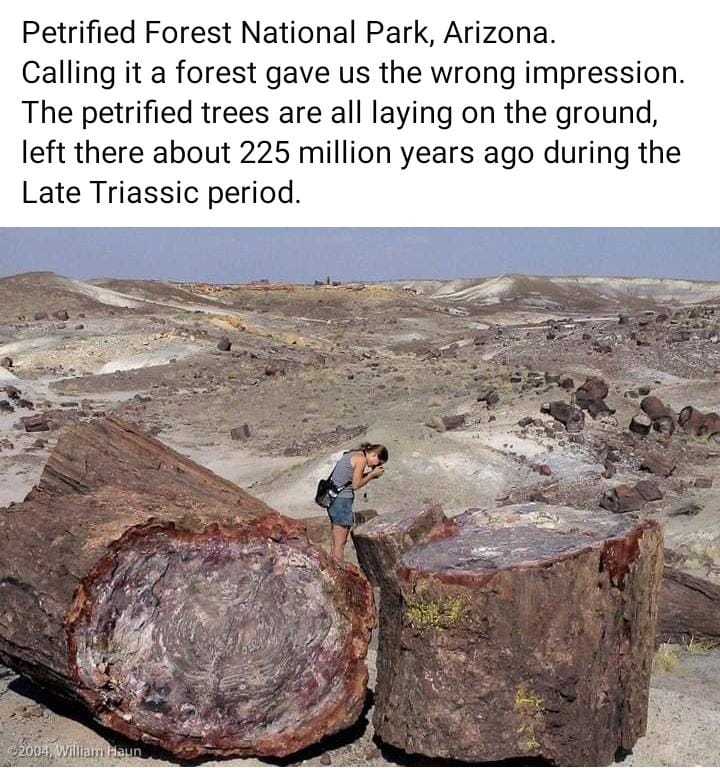
Petrified wood occurs in different regions, and not every buried tree becomes a fossil. Much plant material decomposes instead of being preserved. The practical rarity for our work lies in finding an individual trunk with the dimensions and structure needed for a large object. The original plant is another part of its history: fossil woods may come from different tree groups, but identifying a particular specimen requires anatomical evidence. A colour or a polished photograph alone does not justify assigning one of our pieces to Araucaria, a cycad or a particular broad-leaved tree. In the workshop, we therefore distinguish a geological identification from a description of the material’s visible pattern.
Reading the colours and mineral patterns in the material
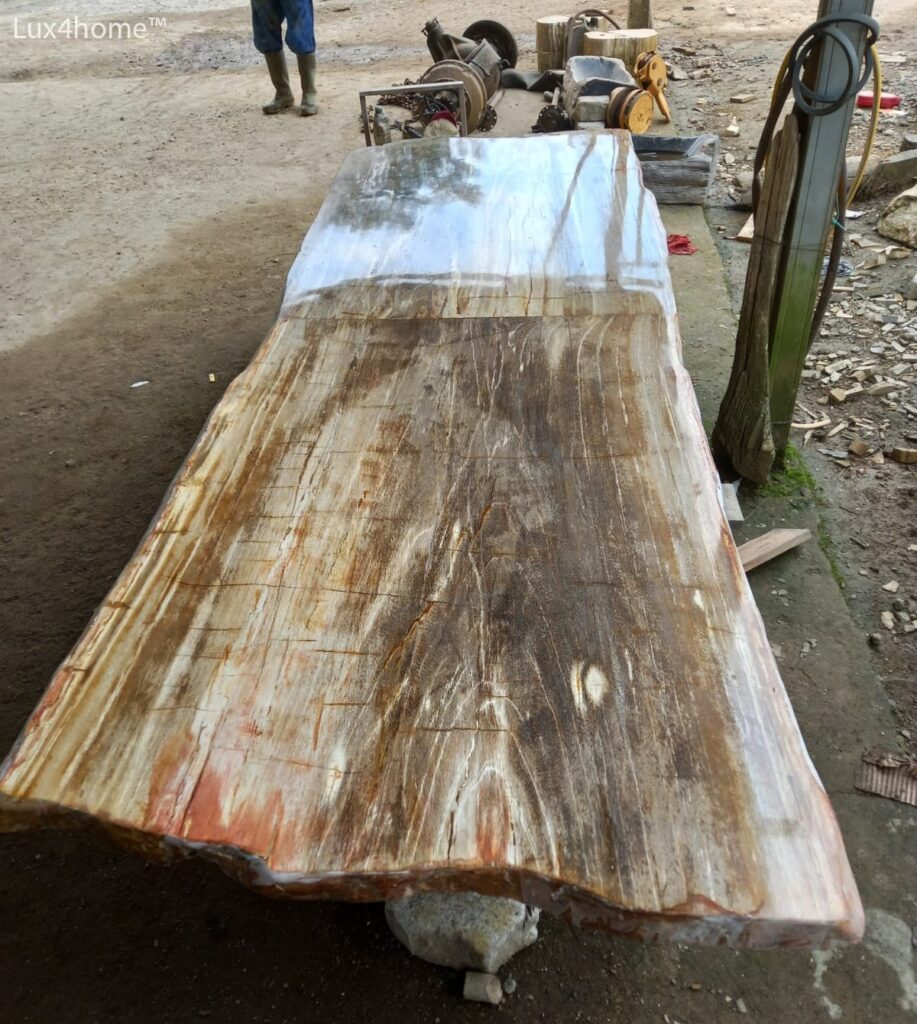
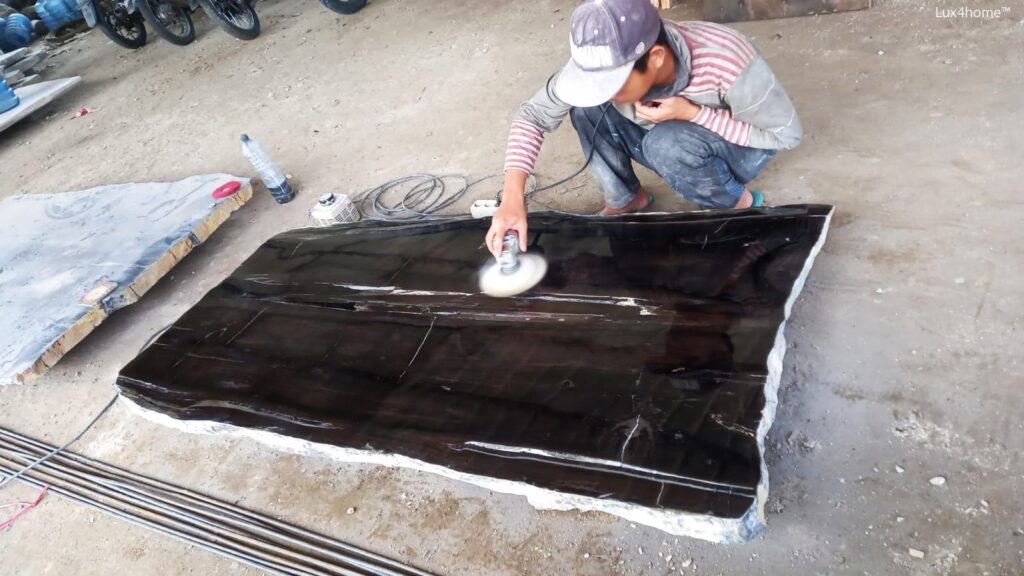
Colour varies with the deposit and mineralization history. Brown, black, cream and mixed patterns can occur within the material we handle. Iron-bearing minerals can contribute colour, and dark areas can also be associated with preserved organic material or other constituents. Colour alone cannot establish a precise mineral composition. The National Park Service describes trace minerals and colours in petrified wood. The brown and black slabs below illustrate visible variation in our material, rather than laboratory identification of their mineral content.
How we source and assess fossil trunks in Indonesia
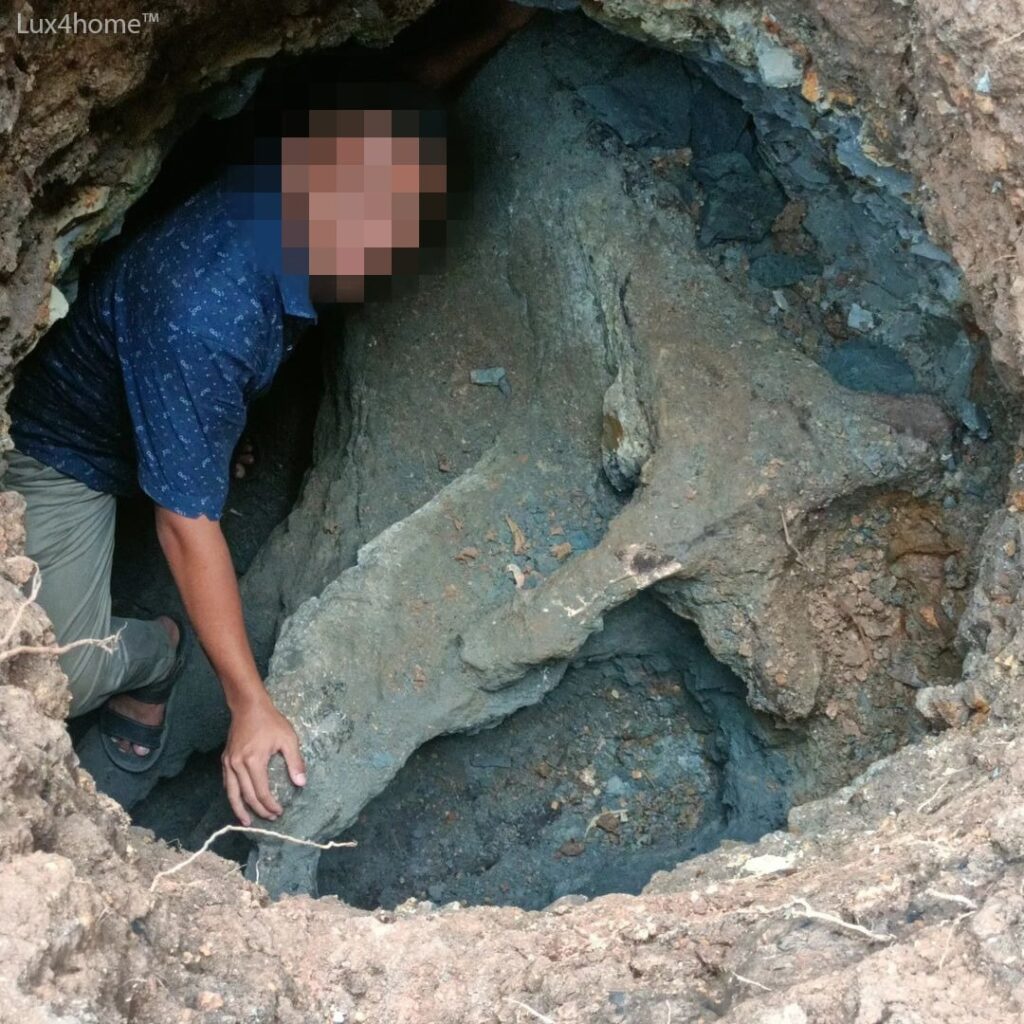
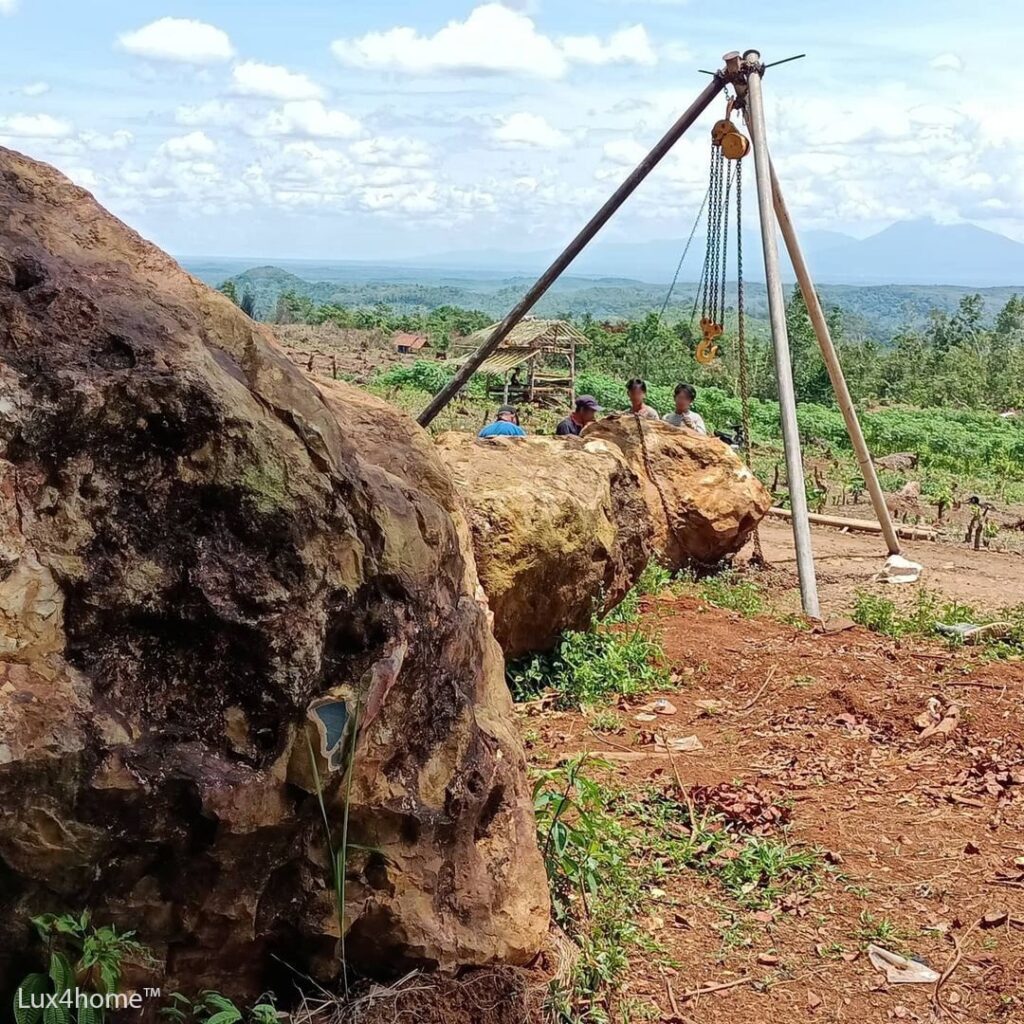
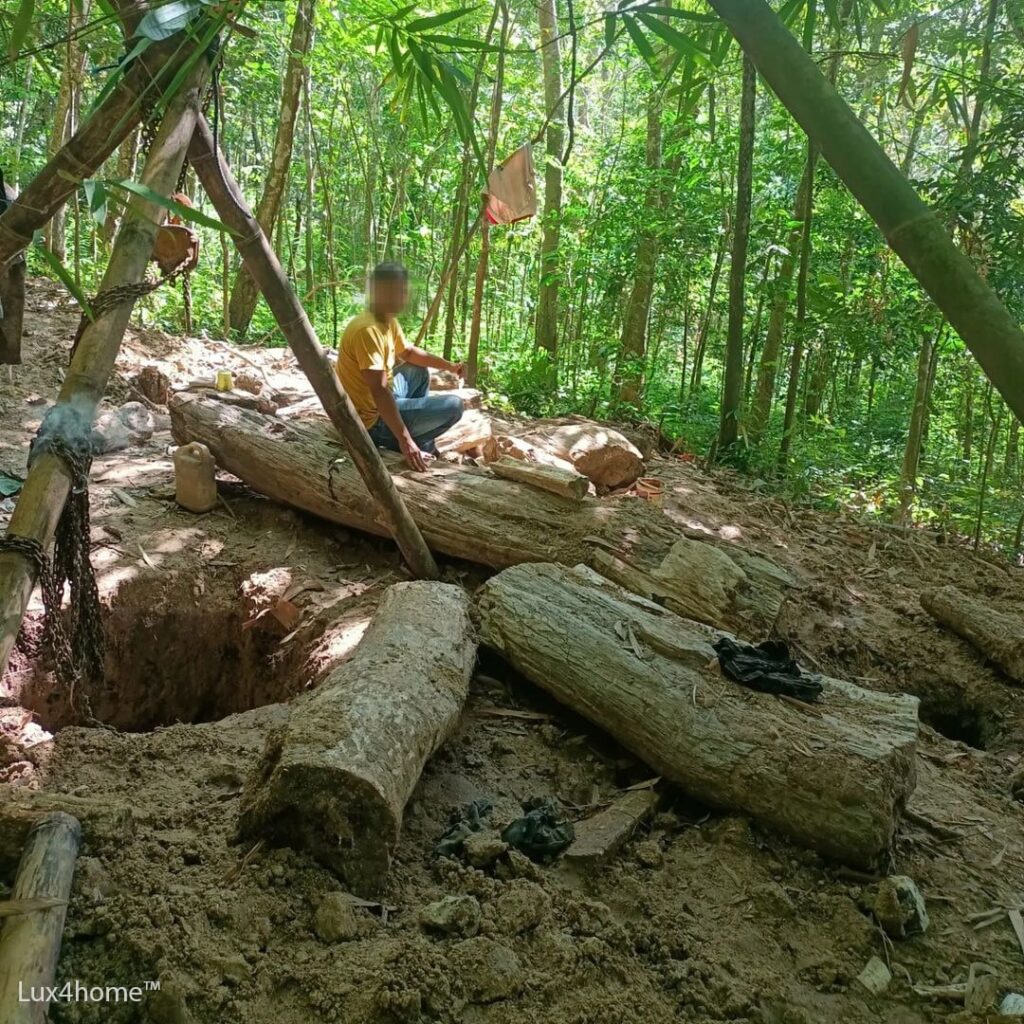
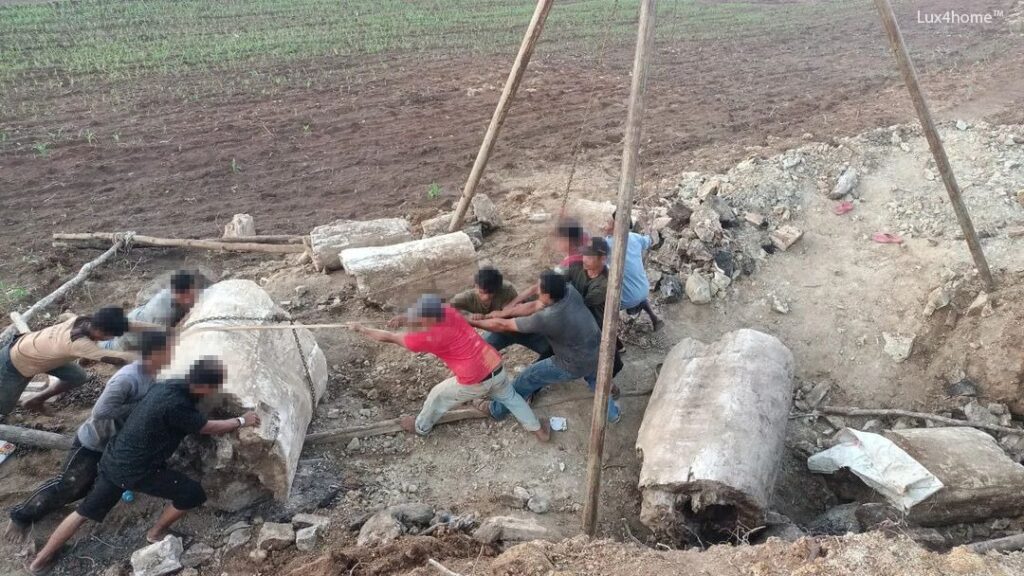
We source fossil trunks in Indonesia, including areas designated for agricultural plantations. Locating and recovering a usable piece requires local experience, appropriate permission and care in handling the material. Our sourcing work has included exploration as deep as four metres, although the depth varies between locations. After recovery, the material needs to be handled carefully and assessed for the intended object. Its origin and the conditions of recovery form part of the story of each piece, alongside the pattern revealed during cutting and polishing.
After recovery, dimensions alone do not decide whether a trunk is suitable. The workshop must consider its usable cross-section and any visible breaks before committing the material to a large carved object. A trunk that cannot provide a suitable bath-sized section may still offer material for smaller forms.
Natural patterns and colour changes remain part of the finished piece. Their value to a design is in their individual appearance and material history. Each fossil offers a different combination of colour, preserved structure and usable dimensions.
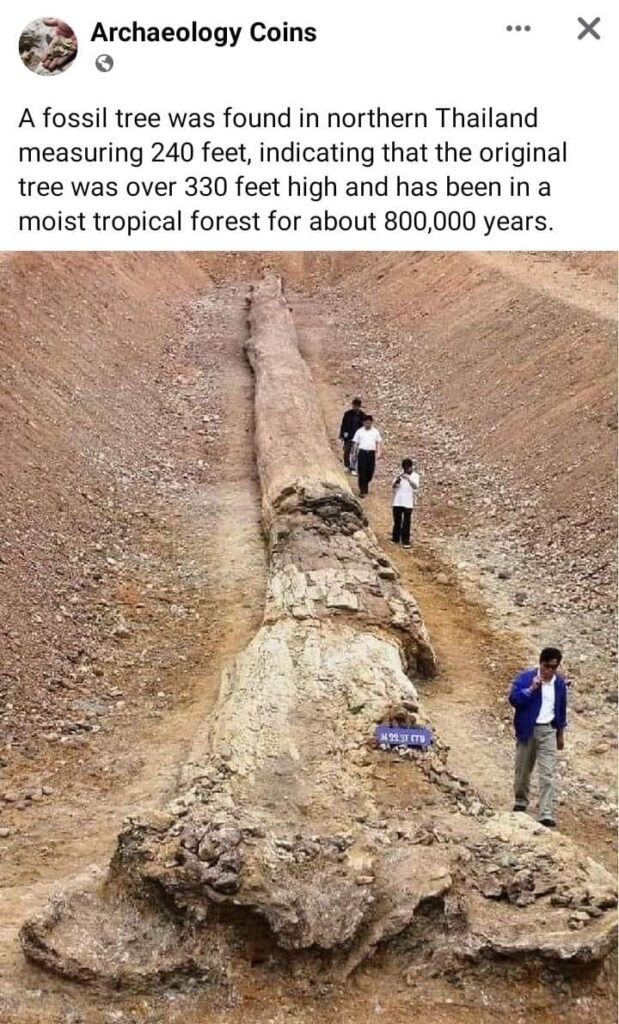
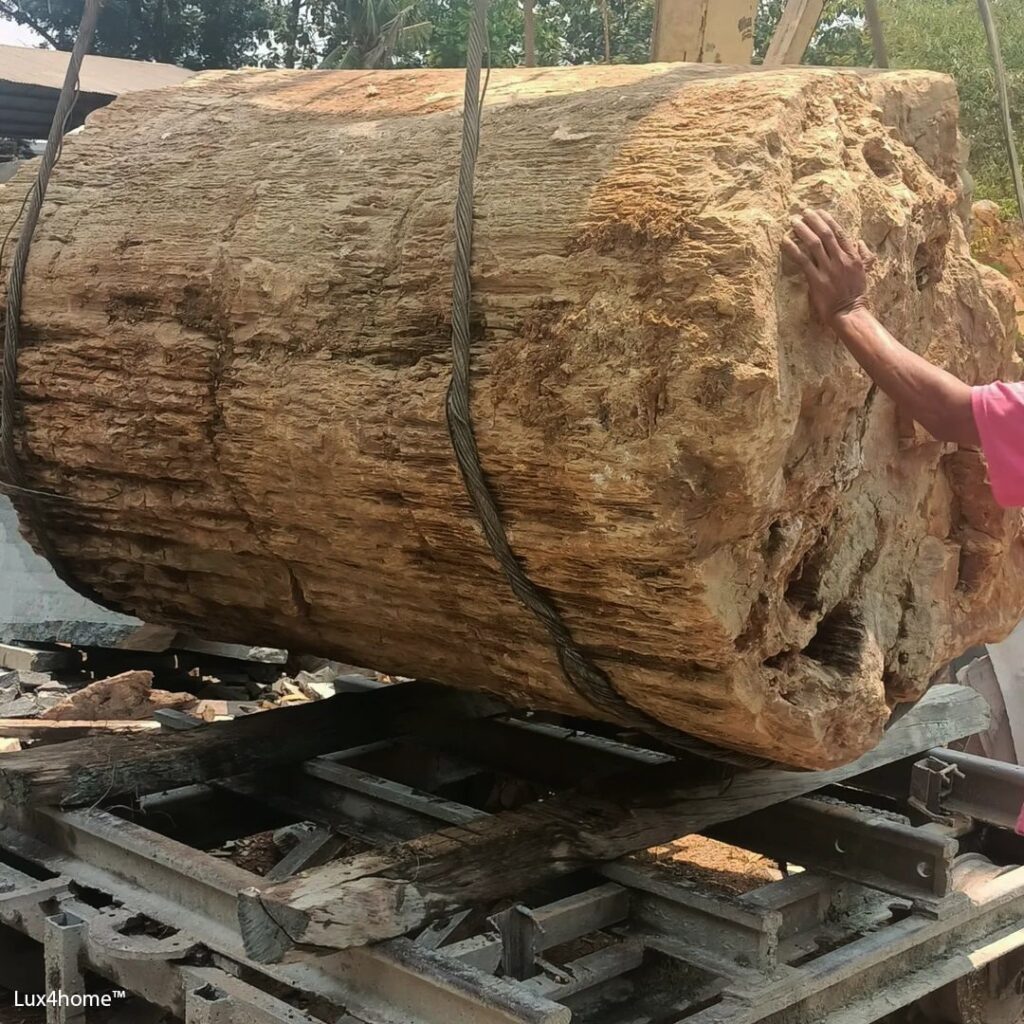
See how large a tree was found underground. Now it’s petrified wood, a plant that lived millions of years ago.
Why a large trunk may still be unsuitable for carving a bath
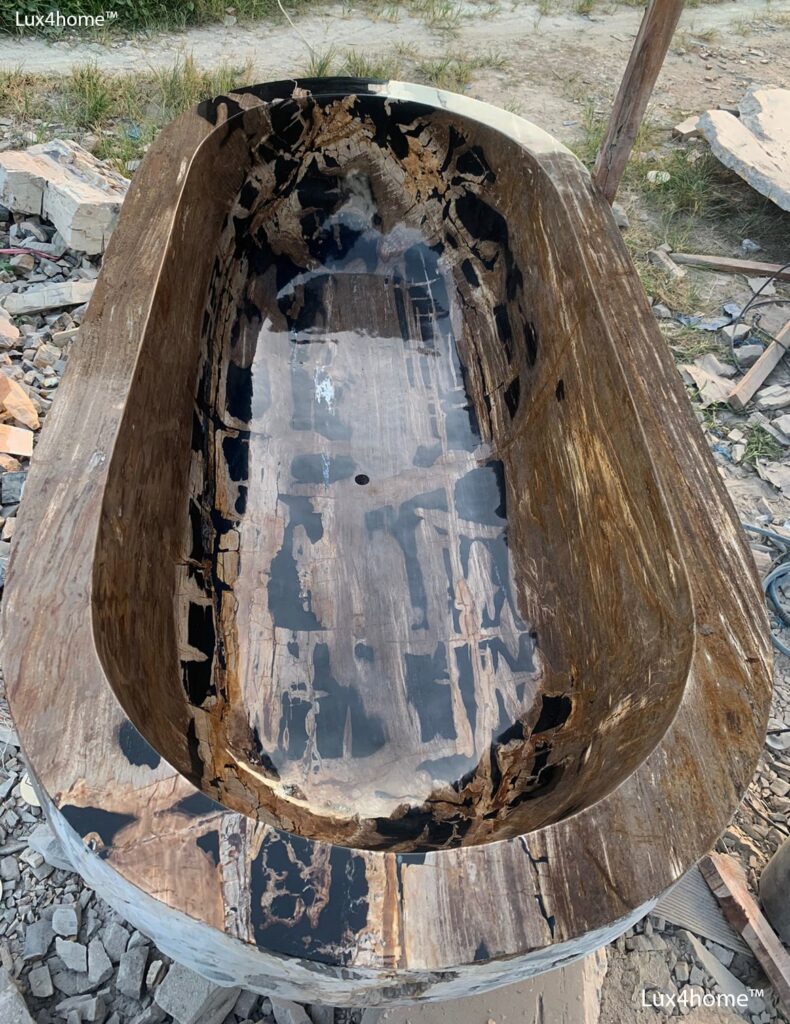
A large outer diameter is only the first requirement. The intended bath must fit within the usable part of the fossil, with enough material for its walls and base. For example, a design requiring 60 cm of external width or height needs a trunk that can accommodate that dimension after shaping; 60 cm is not a universal minimum for every commission. Length must also be assessed independently. An originally long tree may now consist of cracked or separated sections, so its original overall size is not the available carving length. Ground movement and the history of the deposit can affect the recovered material. These constraints explain why selecting a bath-sized piece can be difficult and why a drawing must be considered together with the actual fossil. Availability depends on finding a suitable piece for that particular design.
Cutting, hand carving and resin stabilization in our workshop
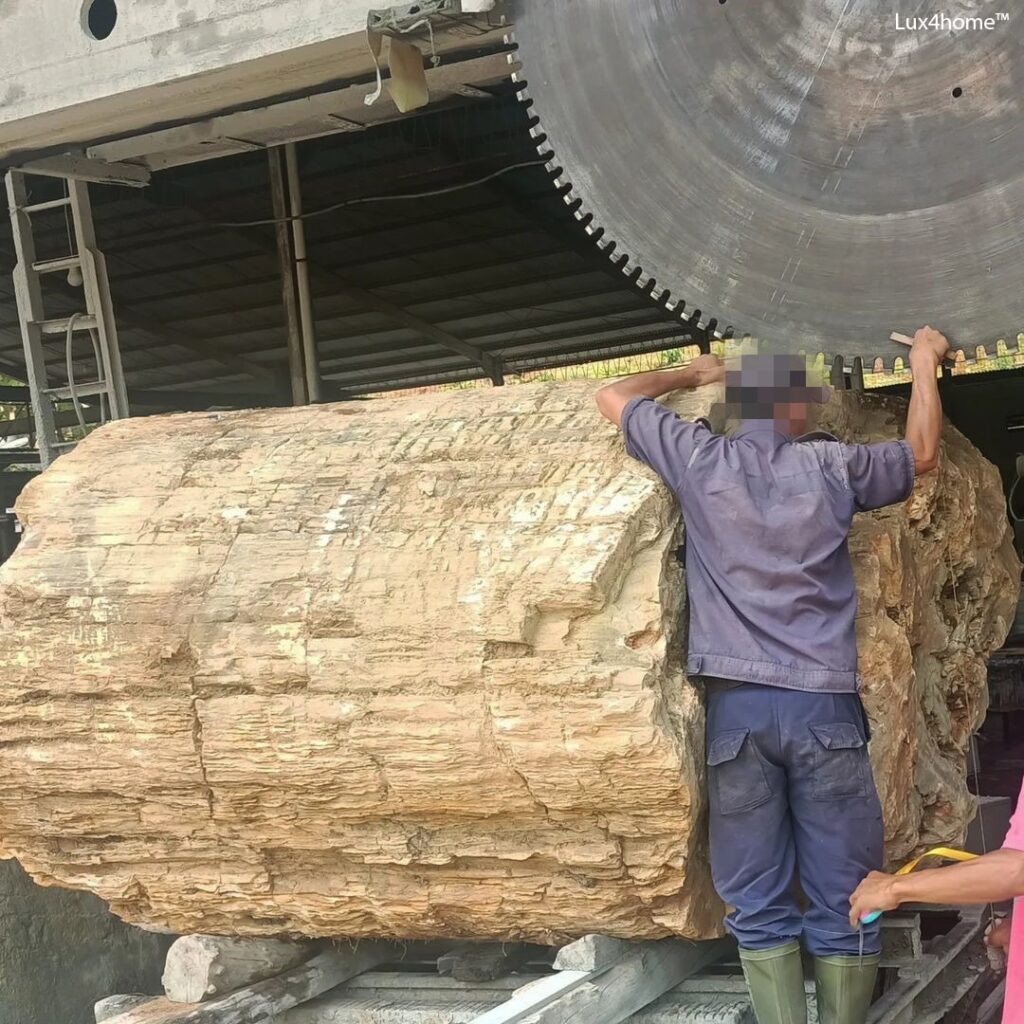
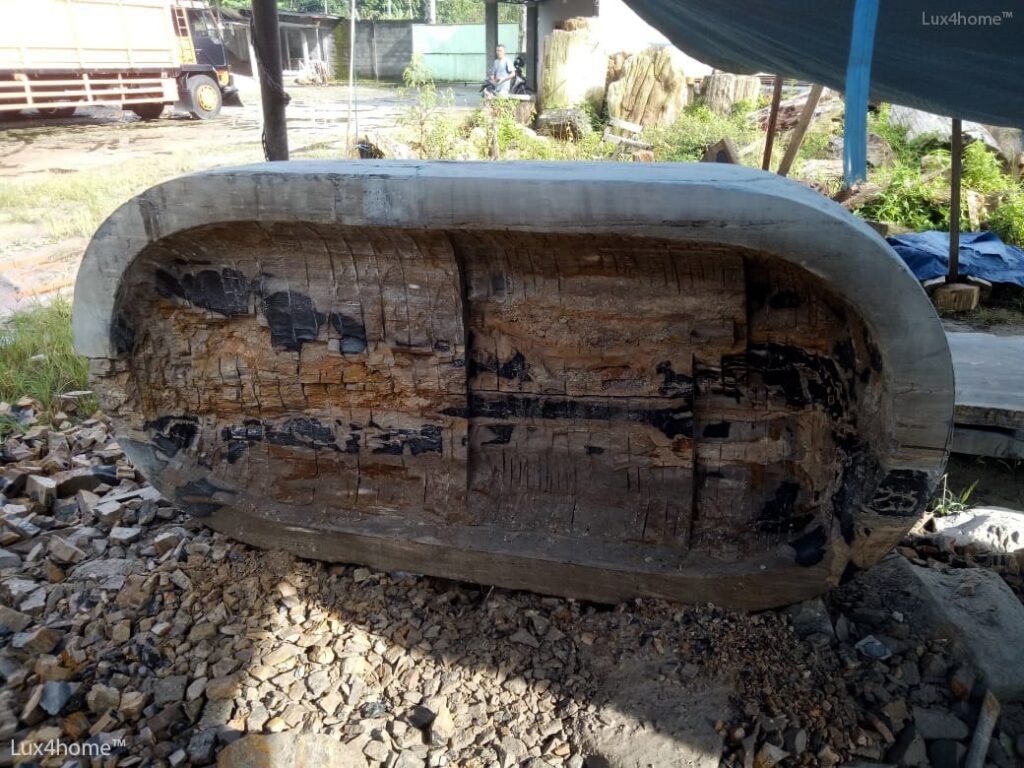
We craft these pieces by hand, using a large saw for the initial cuts and hand-controlled tools for hollowing, shaping and polishing. The maker works progressively across the available material rather than treating every fossil as an identical block. Attention to the exposed surface helps identify changes in structure as work progresses. Careful handling and avoiding excessive impact are important because vibration and strikes can contribute to fractures. The natural structure cannot be redesigned by the workshop. Resin stabilization is part of the finishing process we describe here: it is used to consolidate the natural fossil material. It does not mean that the bath is moulded from a mixture of resin and stone powder. Stabilization, carving and polishing have different purposes and should be distinguished when discussing a finished piece. The surface pattern remains individual to the fossil; another commission will not reproduce the same grain and colour arrangement.
What the material means for an individual commission
For an individual commission, the available fossil sets practical limits. The desired shape and dimensions need to be considered together with the usable part of the trunk. Natural variation also means that two finished pieces will not have identical patterns. For models and ordering options, see our petrified wood bathtubs collection.
How different fossil pieces can become basins and other objects
Different dimensions suit different objects. Alongside baths, we work with the material for countertop and freestanding basins, decorative pieces, dining and coffee tables, countertops and bespoke commissions. A smaller piece may offer an interesting pattern without providing the long, continuous section needed for a bath. Explore our petrified wood sinks to see basin forms made from this material.
When discussing a project, send the intended use, desired dimensions and any preferences for colour or surface appearance. These details provide a starting point for reviewing available material; they do not make naturally different fossils interchangeable. Allow time for selection as well as production. A bath commission can take several months, so its schedule should be agreed for the actual piece rather than assumed from a catalogue photograph.
To discuss a particular fossil or commission, contact our team using the enquiry form below.